
May 28, 2026
Facilitating NeuroVIZR Sessions at the Hololife Summit
How Bojan ran NeuroVIZR brain stimulation sessions at the Hololife Longevity Summit Tokyo, and what we learned about facilitating a 20-minute device protocol at summit scale.

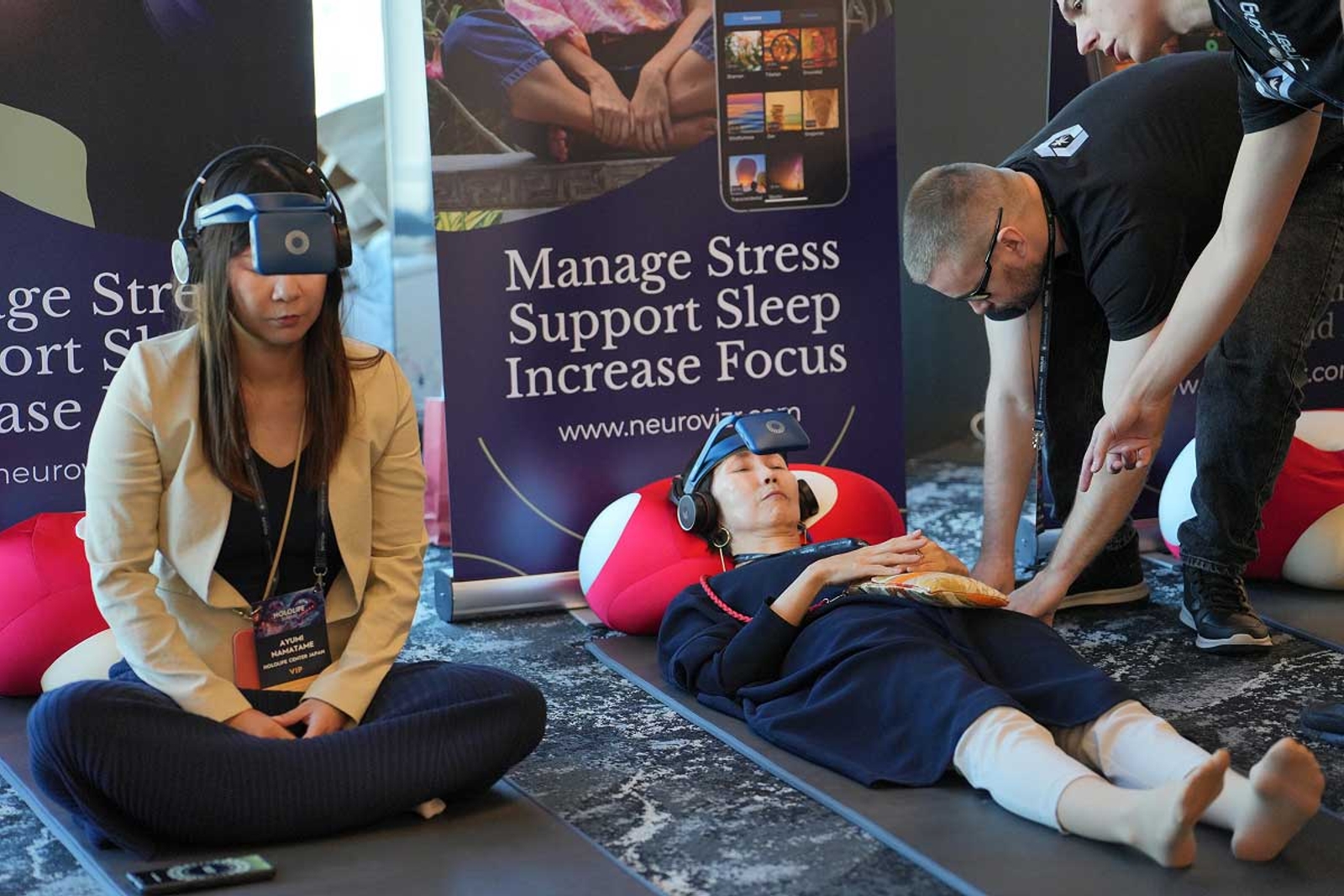
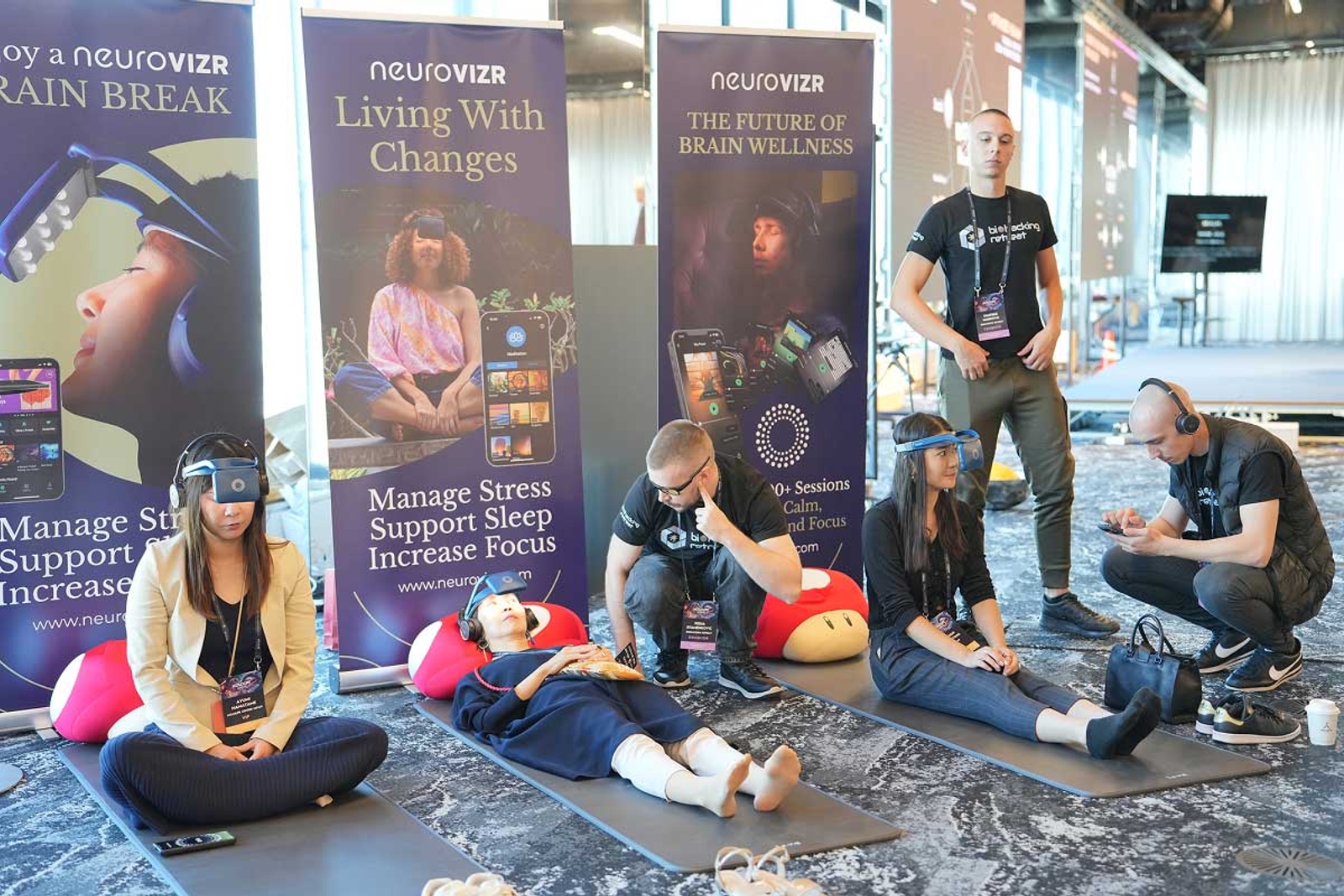
The Hololife Longevity Summit brings practitioners, researchers, and operators in the longevity space together for several days of talks, demos, and hands-on protocol work. Bojan facilitated NeuroVIZR sessions at the Tokyo edition, running the light-and-sound brain stimulation device for summit attendees across the days of the event. This case study covers what NeuroVIZR is, why it earned a place in the facilitation lineup at a longevity-focused summit, and what we observed running it at scale outside a retreat environment.
The Hololife Summit context
Hololife is structured around the same intersection that defines current longevity work: clinical diagnostics, biohacking protocols, and contemplative or integrative practice. The Tokyo edition drew a mixed audience of healthcare professionals, biohackers, executives, and longevity-curious general attendees. Most had heard of neurofeedback and brain stimulation devices. Few had used one. The facilitation slot gave attendees direct experience of a device they had read about but never tried.
NeuroVIZR device overview
NeuroVIZR is a brain stimulation device that delivers patterned light through goggles paired with synchronised audio. The protocol targets neural plasticity windows by entraining cortical activity to specific frequencies, with audio cues designed to shift the autonomic nervous system into target states.
Documented mechanisms in the supporting literature include cortical entrainment through photic stimulation, autonomic state modulation through binaural and isochronic tones, and acute increases in subjective measures of focus, calm, and clarity. Sessions run around 20 minutes. Effects are felt during the session and persist for several hours afterward in most users.
How we ran the facilitation
Three considerations shaped the facilitation protocol for the summit format.
First, summit attendees arrive with elevated sympathetic load. Days of talks, travel, social engagement, and unfamiliar environments raise baseline cortisol and reduce HRV. We selected a reset-and-clarity opening protocol designed to drop sympathetic activation and restore cognitive bandwidth before any goal-directed session.
Second, throughput matters at summit scale. A retreat gives each participant multiple sessions across multiple days. Summit facilitation gives each attendee one calibrated 20-minute session, with pre-session screening and post-session debrief built around that constraint.
Third, education runs alongside facilitation. Each session included a short briefing on what NeuroVIZR is, what mechanism the chosen protocol targets, and what to notice during and after the session. Attendees left with the knowledge needed to evaluate the technology themselves, not just the experience of having tried it.
Participant response patterns
Three response patterns dominated across the sessions.
Practitioners with existing meditation or breathwork experience reached the target state faster, often inside the first half of the session. The device functioned as accelerator rather than primary intervention for that group.
Practitioners new to autonomic-state work experienced the session as novel rather than transformative. The mechanism worked. They needed additional framework for how to apply the resulting state.
Practitioners with disrupted sleep or chronic sympathetic load reported the strongest acute response. The reset-and-clarity protocol matched their condition. Several requested follow-up information for home use.
What we learned about facilitation at scale
Three observations now shape how Biohacking Academy approaches summit and event facilitation.
Pre-session screening produces more outcome variance than session length. A 90-second intake conversation that surfaces sleep quality, current stress load, and prior experience with autonomic work changes which protocol is selected, which changes the response.
Post-session debrief drives follow-through. Attendees who received a structured debrief linking the session experience to a specific home practice were the ones who followed up afterward.
One session at a summit functions as an introduction to the device. The protocol that produces measurable change is the home practice the attendee adopts after the session. Summit facilitation introduces the technology. The retreat or mentoring follow-up delivers the dose.
How this applies inside the programme
NeuroVIZR is part of the standard protocol offering inside Biohacking Academy retreats, where each participant gets repeated sessions across the days of the programme rather than a one-off summit demo. The same device protocols inform the cognitive-priming and stress-reset recommendations made inside the online academy and one-on-one mentoring programs. Tokyo showed what NeuroVIZR can do in a 20-minute introduction. The Ibiza 2025 case study shows what repeated sessions across a residential week produce.

